Key takeaways
- Start by counting what you own, not by shopping for shelves.
- Group clothes by hanging length, folded stacks and shoes before you design.
- Choose materials and finishes that fit your home and your habits.
- Plan lighting, doors and accessories early so they fit the layout.
Start with an inventory
Strong closet plans begin with a count. How many shirts, pants, dresses and coats hang? How many stacks of sweaters and jeans fold? How many pairs of shoes, bags and belts need homes? Write numbers down, even rough ones. They tell you how much hanging, shelf and drawer space you need.
Take a few photos of the closet as it is, plus its measurements: width, depth, ceiling height and the position of doors, windows, vents and outlets. A good designer will measure again, but your notes speed the conversation.
Zone the layout
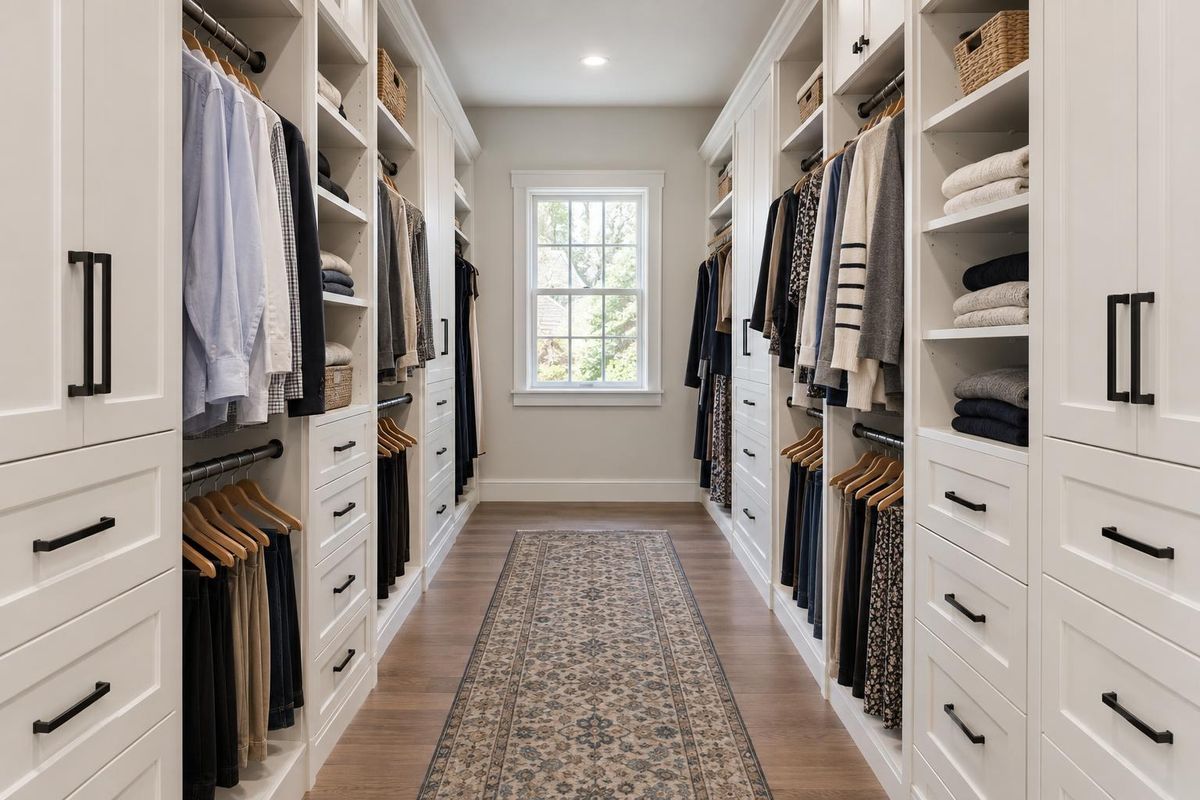
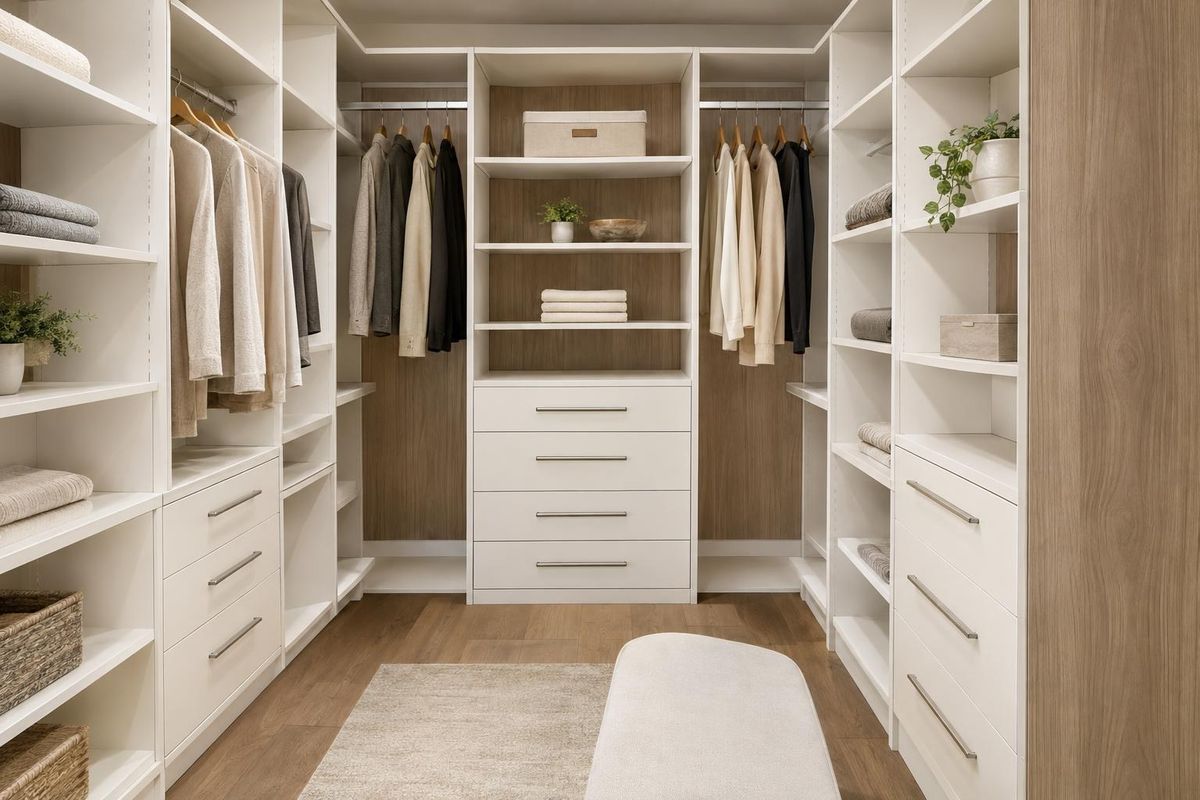
Group clothes into zones: long hanging for dresses and coats, double hanging for shirts and pants, shelves for knits, drawers for small items and a shoe area at easy heights. Place daily pieces at eye level and seasonal pieces up high or low.
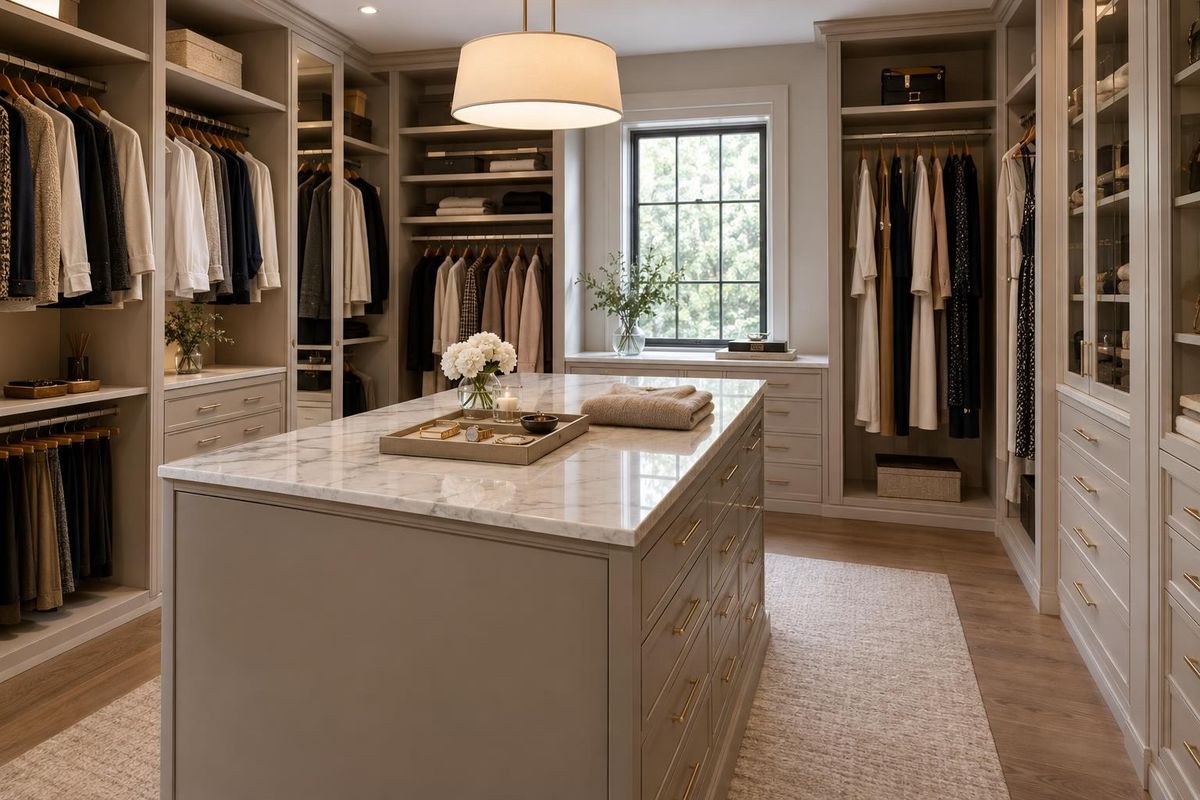
Think about traffic. In a walk-in, aisles need room to walk and open drawers. In a reach-in, put the most-used zone where the doors open widest.
Choose materials and details
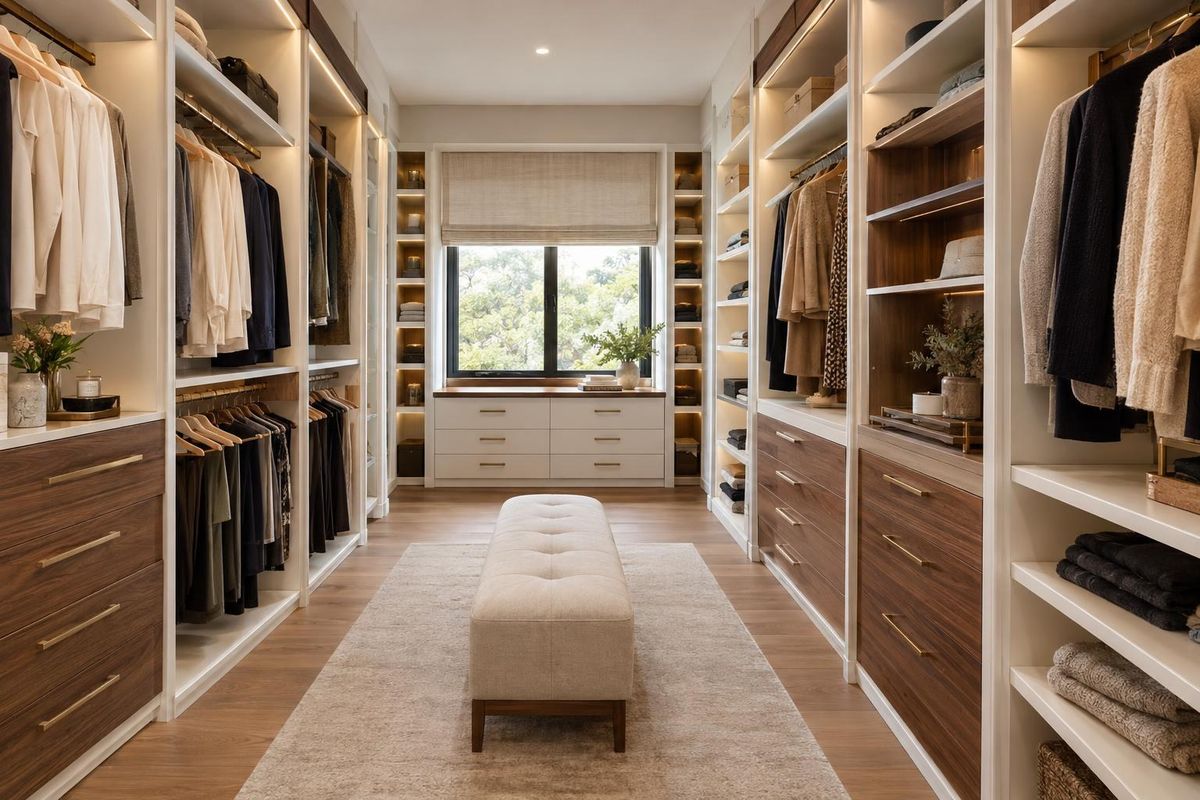
Melamine and laminate are durable and wipe clean, real wood adds warmth and wire is practical where airflow matters. Pick finishes that suit the bedroom and hardware that you like to touch every day.
Add the details early: lighting, mirrors, valet rods, hampers and doors. They are easier to plan into a layout than to add later.
Review, install and settle in
Before anything is built, review the plan, ideally in a 3D view, and ask what you would change. After installation, walk through the closet, test every drawer and rod and make small adjustments.
Finally, put things away in their zones and give yourself a week to adapt. Most people tweak a shelf or two and then enjoy the result.
Quick answers
How long should planning take?
A simple closet can be planned in one visit and one review. Larger projects may take a few conversations.
Should I buy organizers before the design?
It is better to wait. The design tells you what components you need.
Can I plan around future needs?
Yes. Leave flexible zones and adjustable components for changes.